Official Publication
Act published in the Official Journal of the European Union.




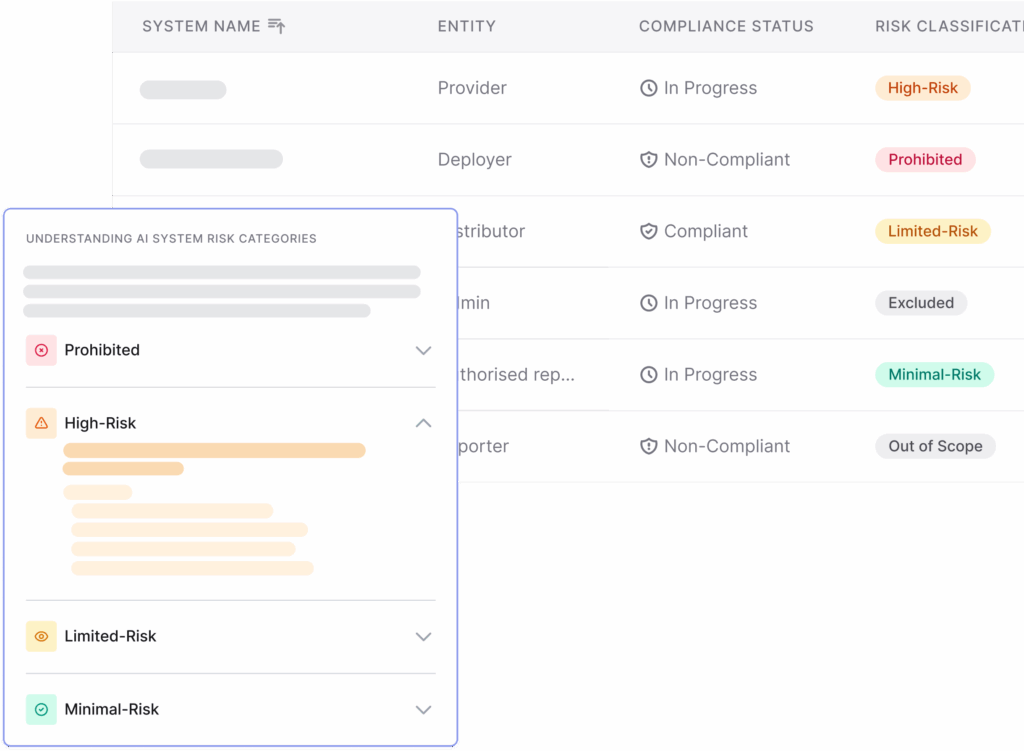
AI System Inventory & Risk Classification - Centralized system registry with guided risk determination and defensible compliance records.

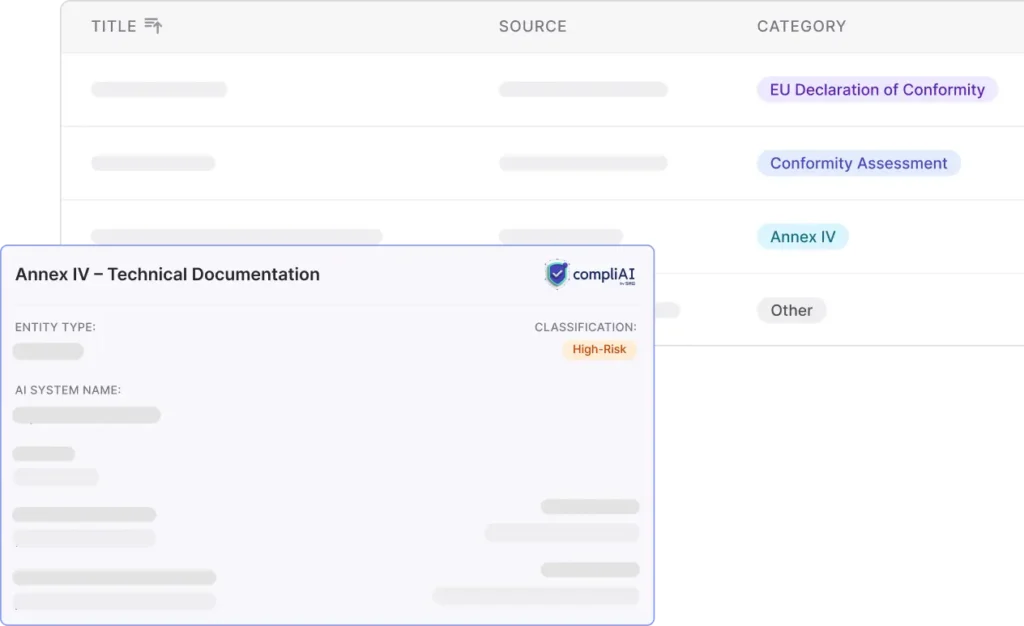
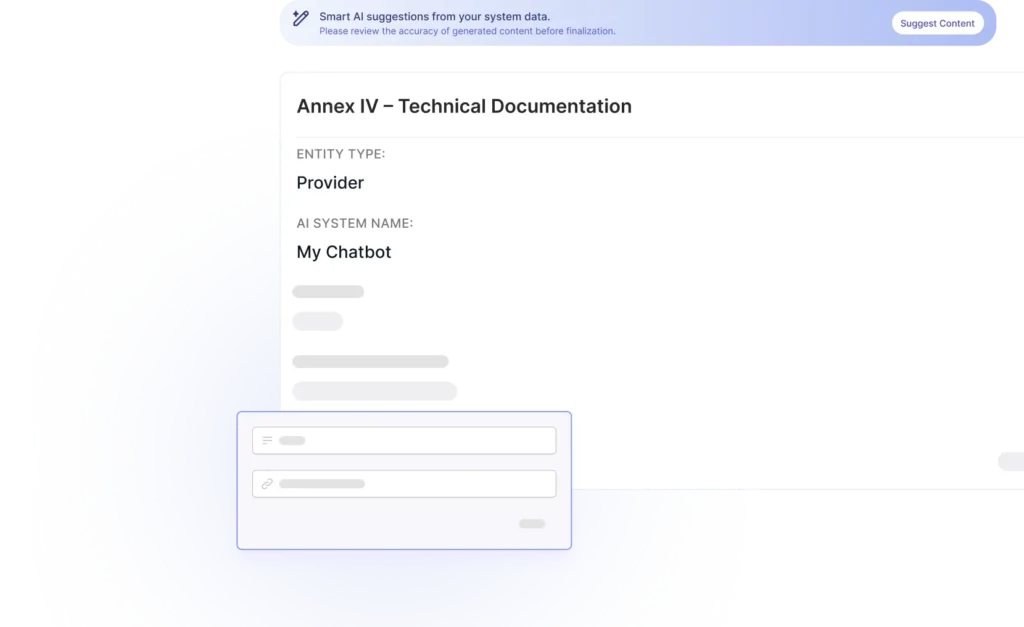
Annex IV Technical Documentation Automation - Automated creation and maintenance of Annex IV technical files with integrated evidence sources.

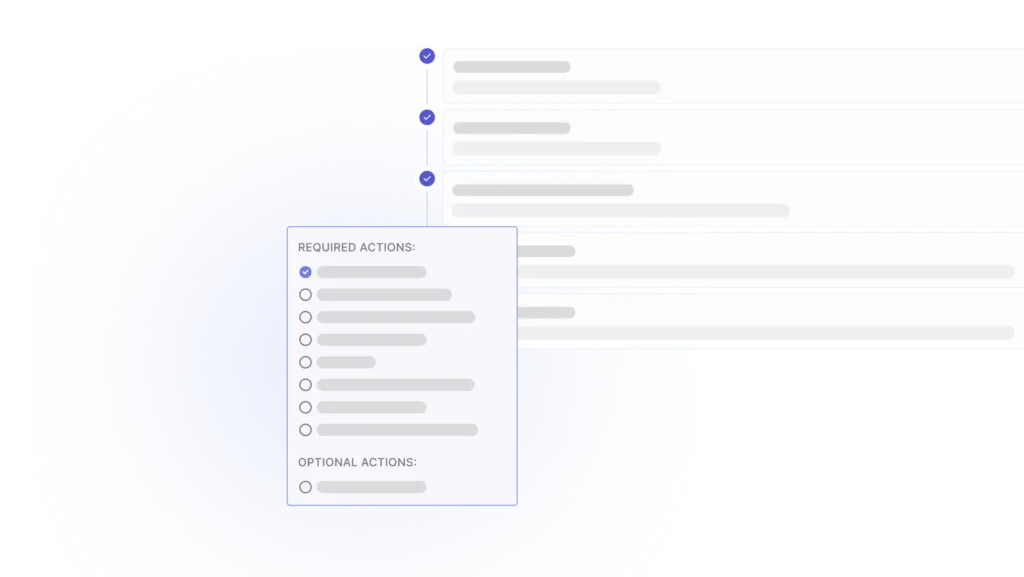
Requirements Workflow & Conformity Management - Structured tracking of the conformity steps and integration of the oversight with the notified body, CE mark, and compliance certification

Audit & Continuous Monitoring - System audits with compliance reporting, enforced corrective control, and detection of changes in the system to provide seamless oversight.

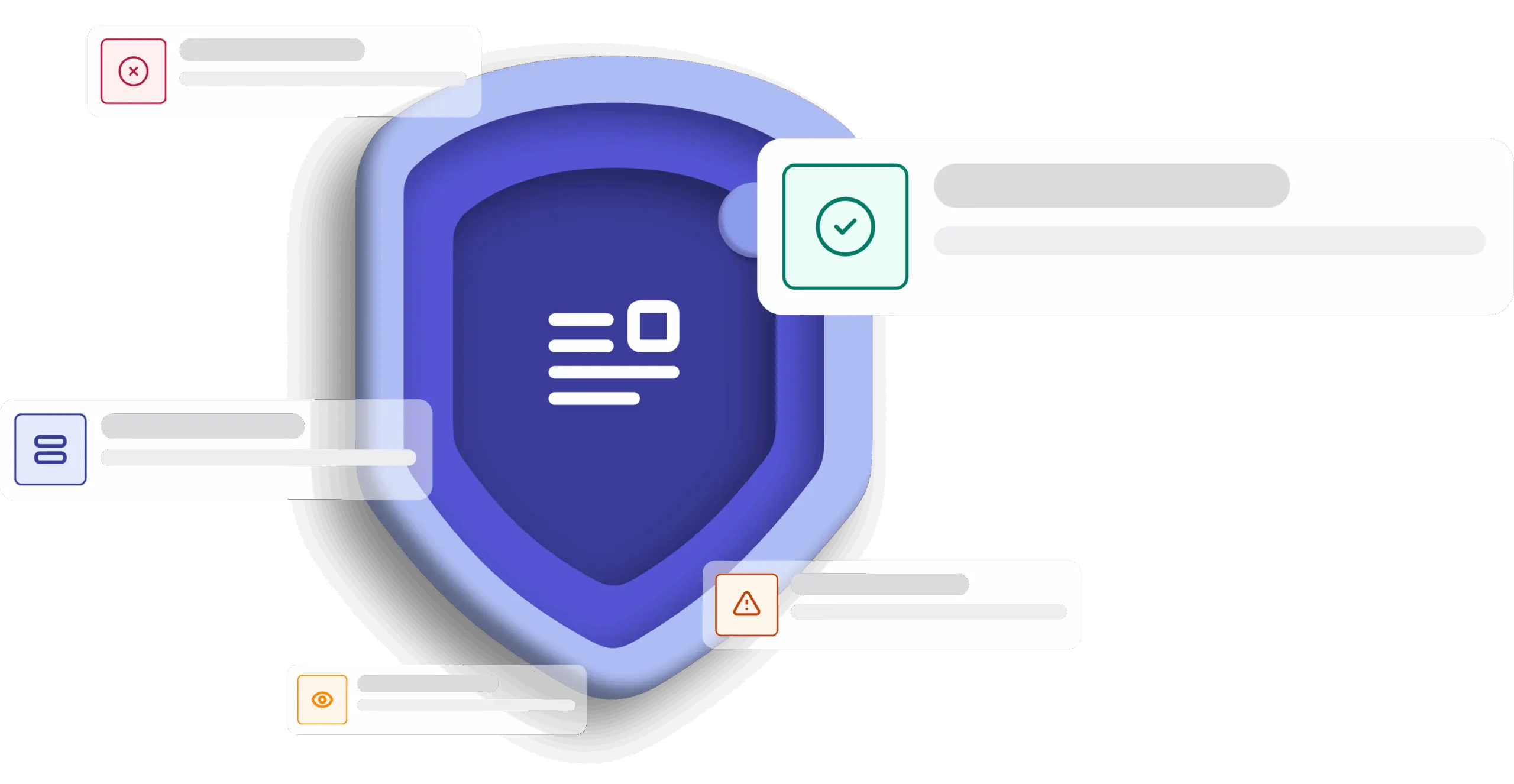
All AI systems must legally be assigned a risk level of either unacceptable, high, limited, or minimal, and assigned compliance duties accordingly.

Organizations that align with the Act early will encounter less expense in remediation, quicker certification, and a favorable competitive position for deployment across the EU.
Act published in the Official Journal of the European Union.
Regulation becomes legally effective, and the implementation period begins.

Ban on unacceptable AI systems and initial literacy requirements apply.

The European Commission finalizes the first codes of practice for general-purpose AI models.

Governance, penalties, confidentiality, and GPAI obligations become enforceable; notified bodies operational.

The compliance phase for high-risk AI systems begins, national sandboxes must be established.

Providers of GPAI models placed on the market prior to August 2025 must fully comply.

The Commission initiates the first formal review of the AI Act, voluntary codes, and Annex III (high-risk system list).

The Commission's power to adjust or add obligations continues unless Parliament or the Council objects.

All public-authority high-risk deployments and large-scale IT systems must be fully compliant.


CompliAI creates a centralized workspace for all AI systems, tracking ownership, version history, and the scope of compliance.

A guided questionnaire determines the system’s legal category under the EU AI Act and defines applicable obligations.
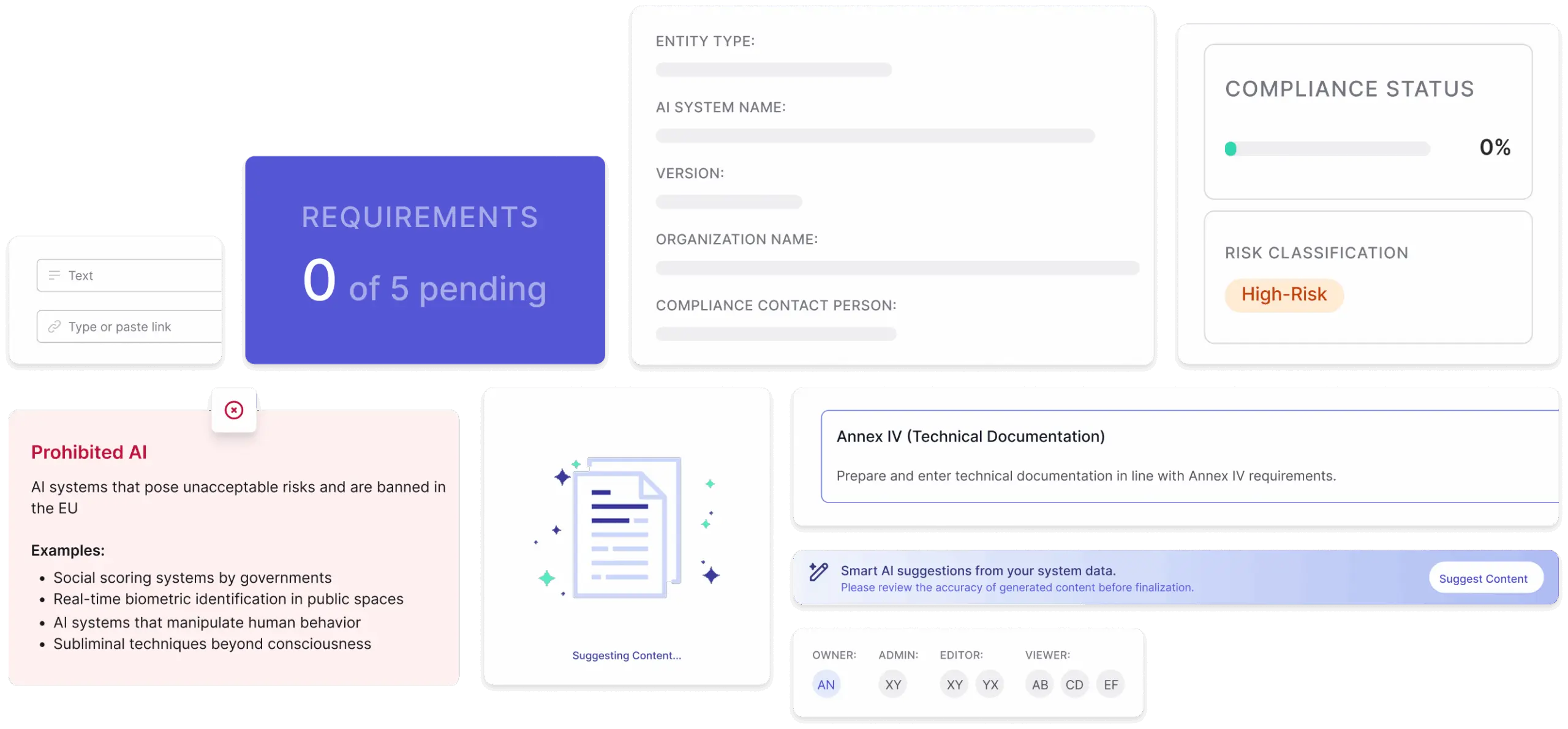
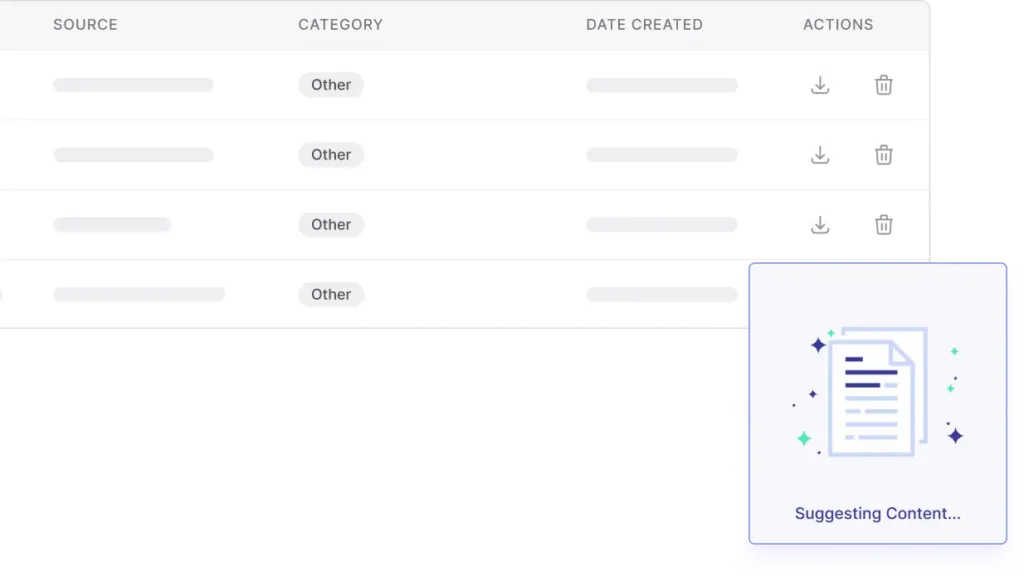
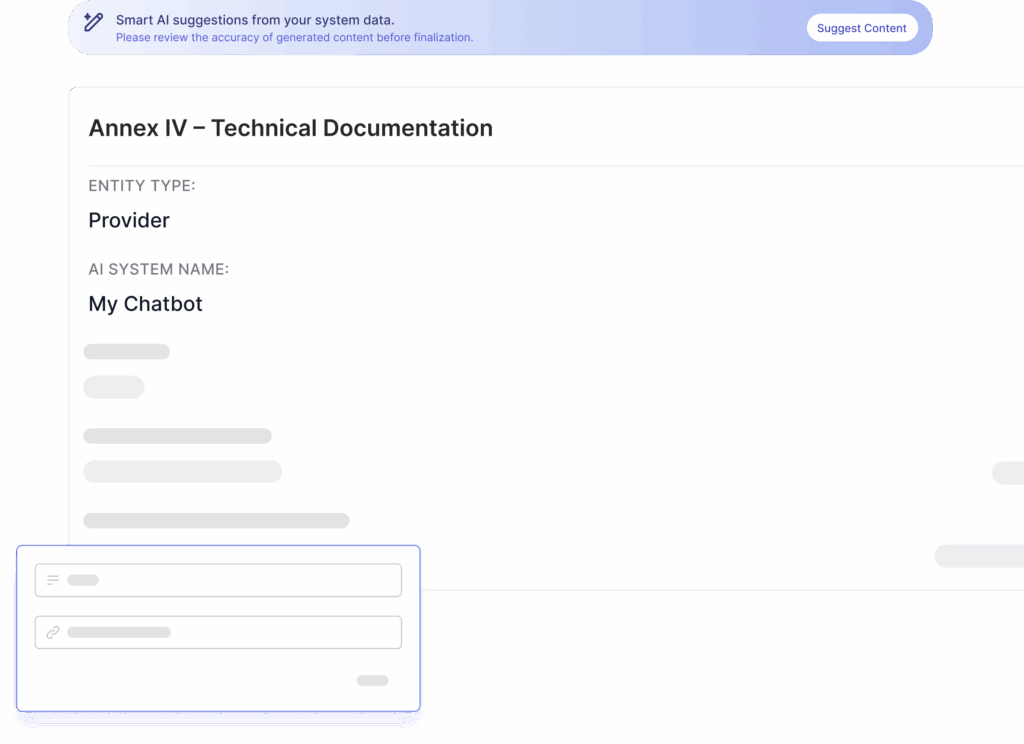
Metadata from repositories and documentation sources is linked directly to Annex IV technical files, maintaining audit-ready records.
Annex IV documentation is generated and validated for completeness before moving to conformity assessment.
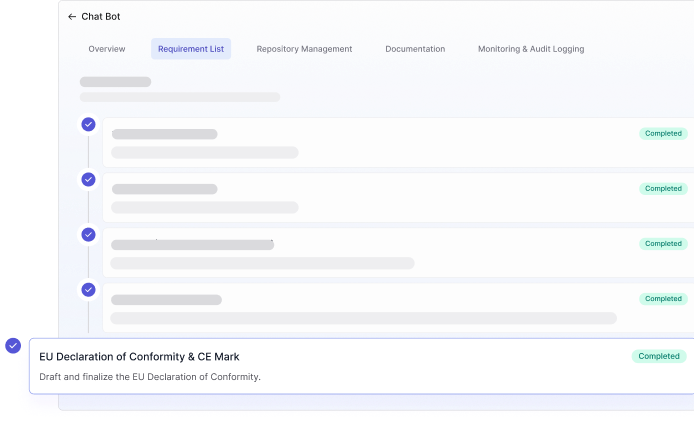
CompliAI supports internal or external review routes, prepares CE-mark documentation, and produces the EU Declaration of Conformity.
Immutable logs, risk dashboards, and change alerts ensure that compliance remains valid after deployment.
CompliAI covers Annex III risk classification, Annex IV documentation, CE marking, and post-market monitoring within a single platform.
The system manages every stage of the compliance lifecycle including risk assessment, evidence collection, conformity assessment, and certification.
CompliAI connects to repositories and documentation sources to generate verifiable, audit-ready records automatically.
A centralized interface displays compliance status, ownership structure, and risk level for all AI systems in real time.

CompliAI provides readiness assessments, policy design, and ongoing compliance administration to support enterprise teams.

The platform accelerates documentation and review processes, shortening project duration and reducing audit preparation time.

CompliAI supports enterprise-scale deployments with traceable controls and continuous monitoring across jurisdictions.


Apply approved changes, update baselines, and reset the monitoring loop.
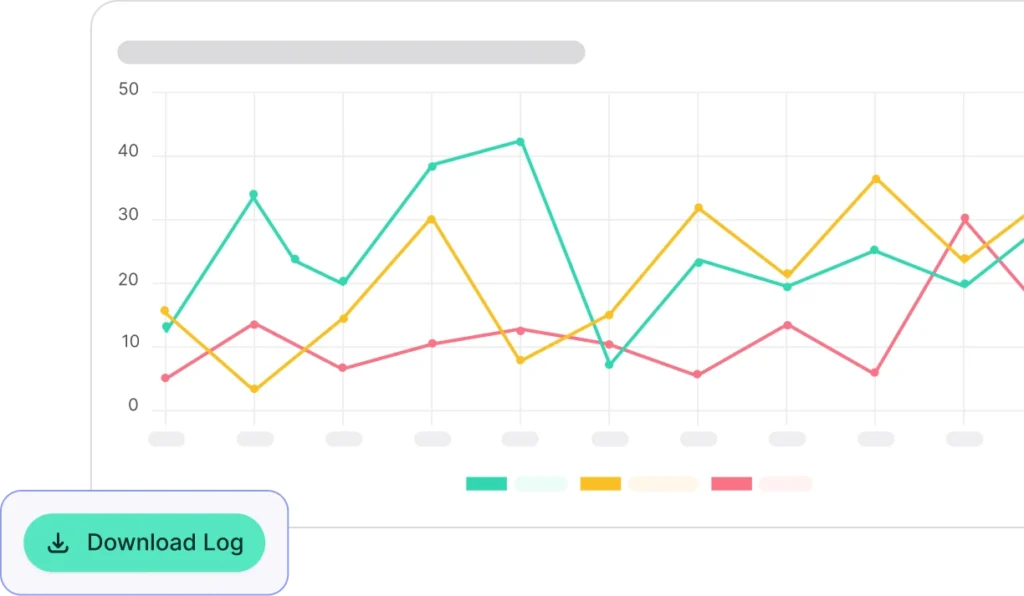
AI audit software captures an immutable entry with evidence, context, and reviewer notes for compliance.
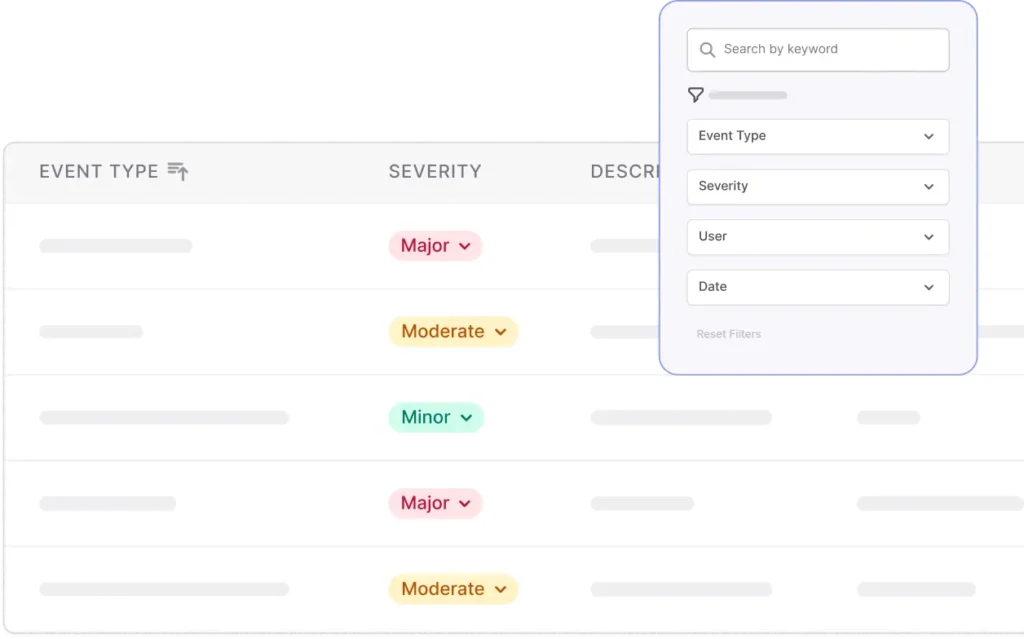

Evaluate flagged issues to determine severity, scope, and whether regulatory reporting or remediation is required.

Detect deviations and trigger prioritized alerts when thresholds or drift detectors are breached.
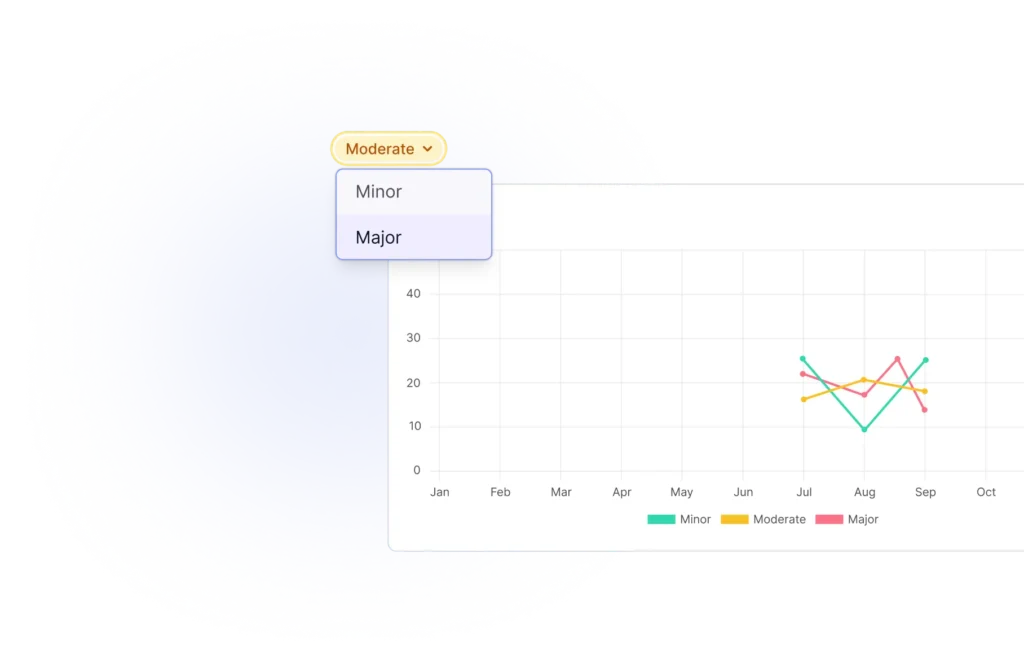

Collect telemetry, performance metrics, and logs continuously from deployed models and pipelines.
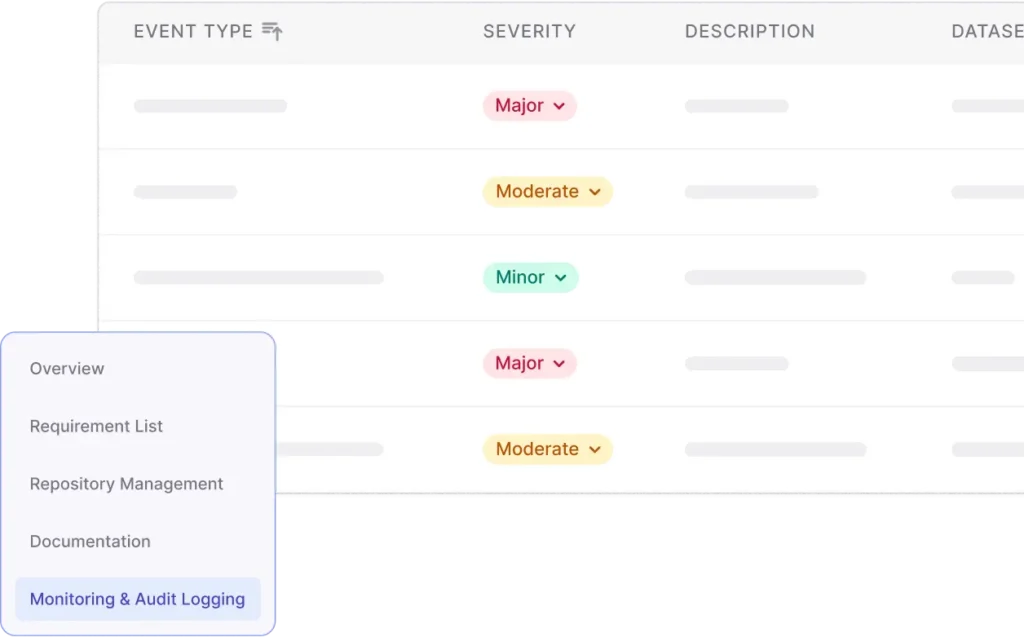

Perform final approvals, lock the workflow state, and output the conformity decision trail for internal records or notified-body review.


Run configured readiness checks and reviews to confirm every checkpoint meets the criteria before advancing.
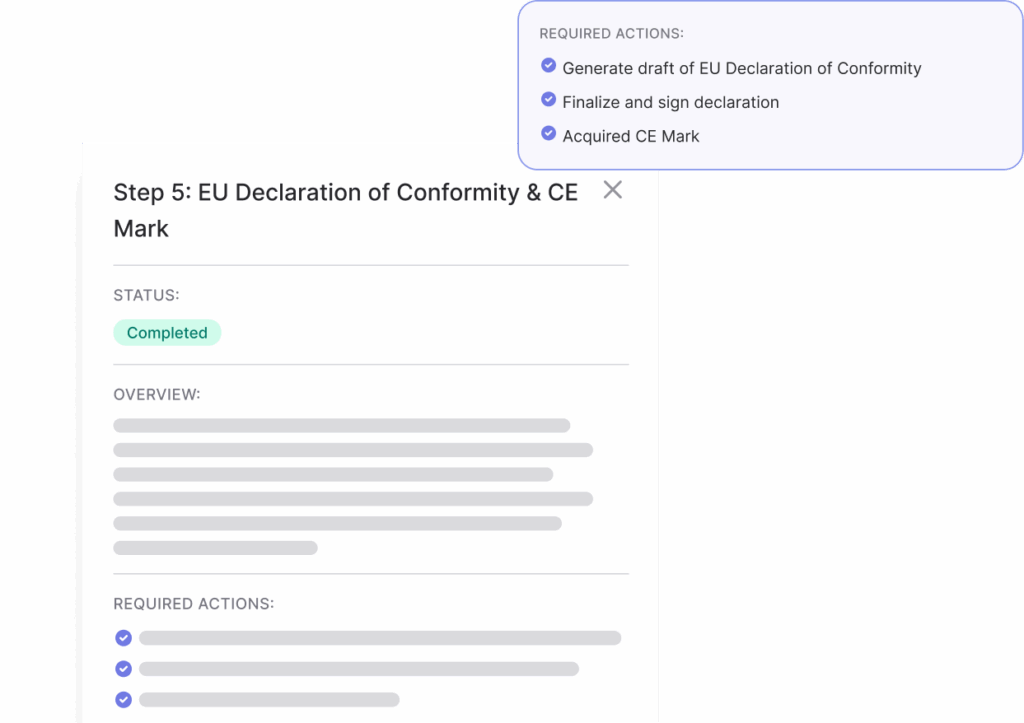

Execute the assigned tasks (testing, verification, and process steps) while recording outcome metadata and timestamps.
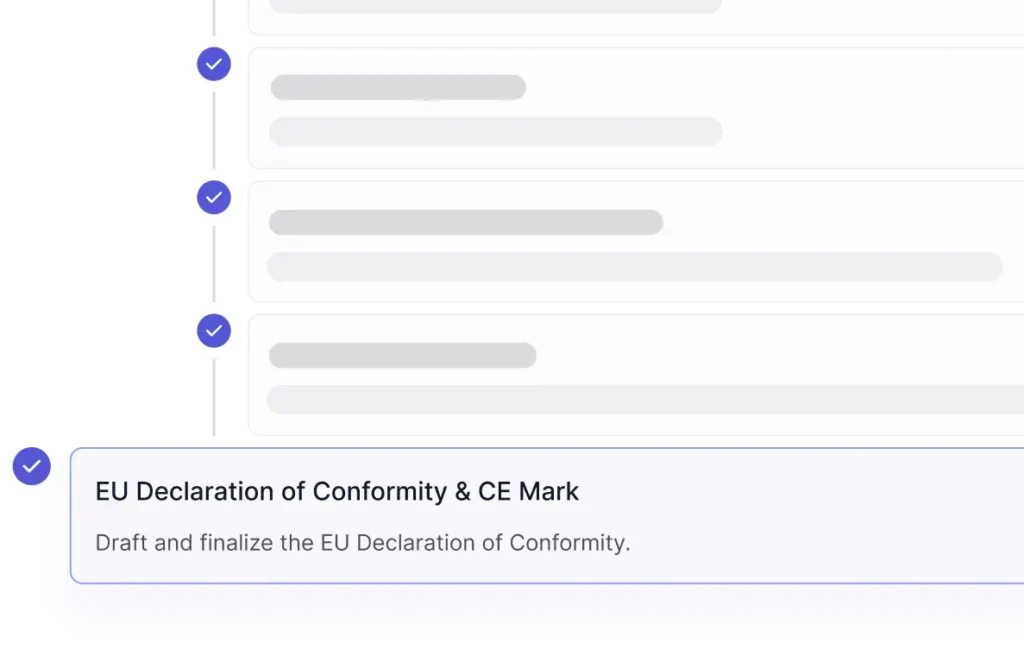

Allocate owners, deadlines, and required roles for each task so nothing remains unclaimed.


Map the system’s intended use and risk profile, then select the required conformity route and task set.
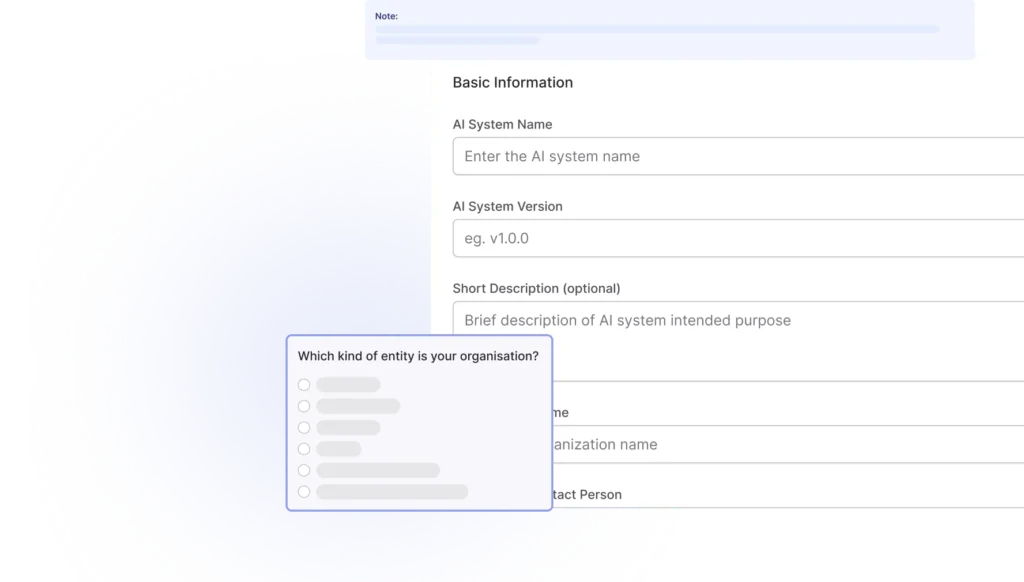

Produce a finalized technical file that is compliant, version-controlled, and ready for internal review or submission.
Perform completeness checks and ensure each section aligns with AI Act documentation requirements before finalizing.
Associate datasets, test results, and design files with their relevant sections to maintain a clear, auditable record.
Collect all necessary system information, design artifacts, and supporting evidence to prepare for Annex IV technical documentation.
Continuously update classifications and inventory entries as models evolve or new AI systems are introduced, ensuring enterprise-wide visibility.
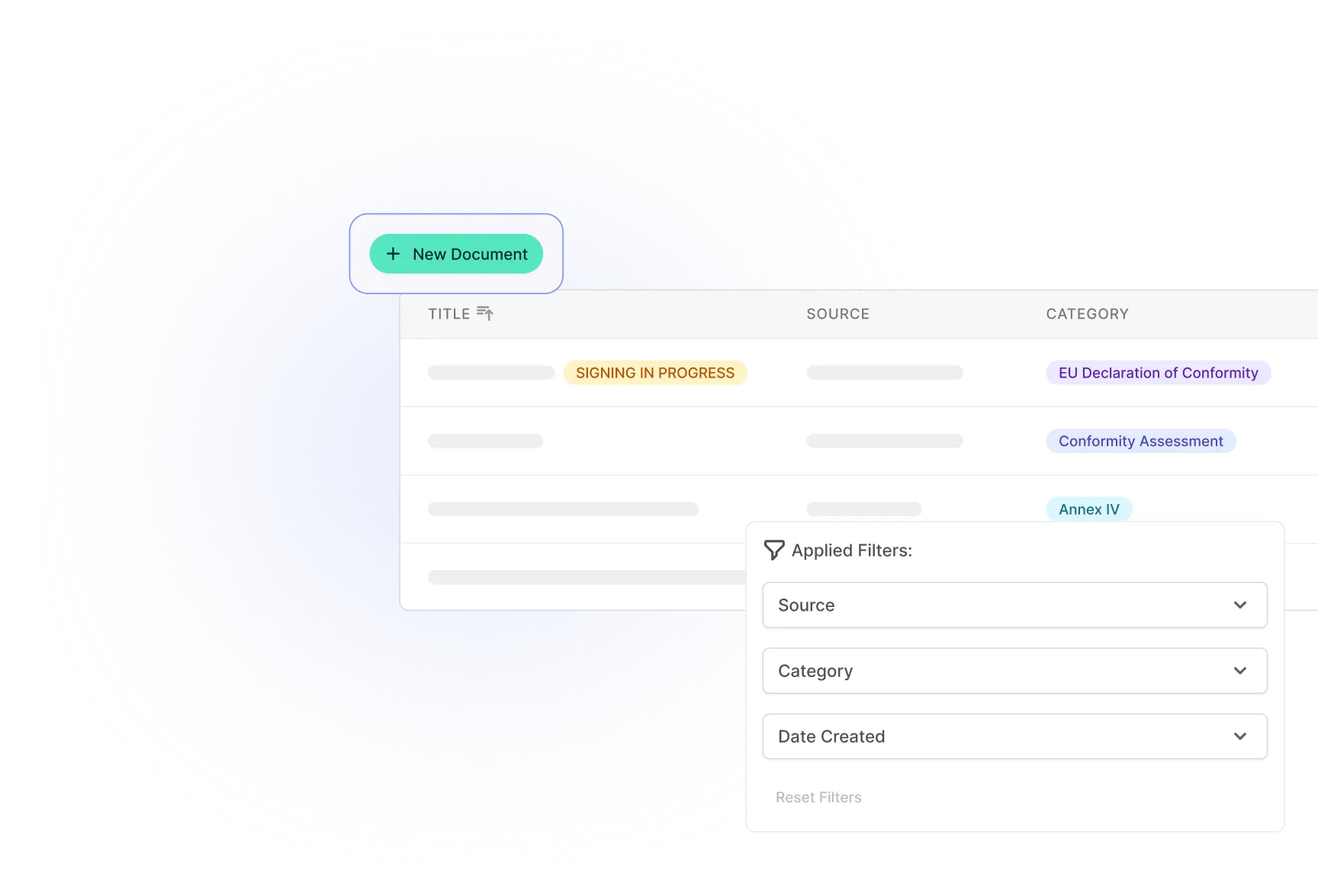

Connect models to datasets, use cases, and previous assessments, maintaining a fully auditable history of changes.
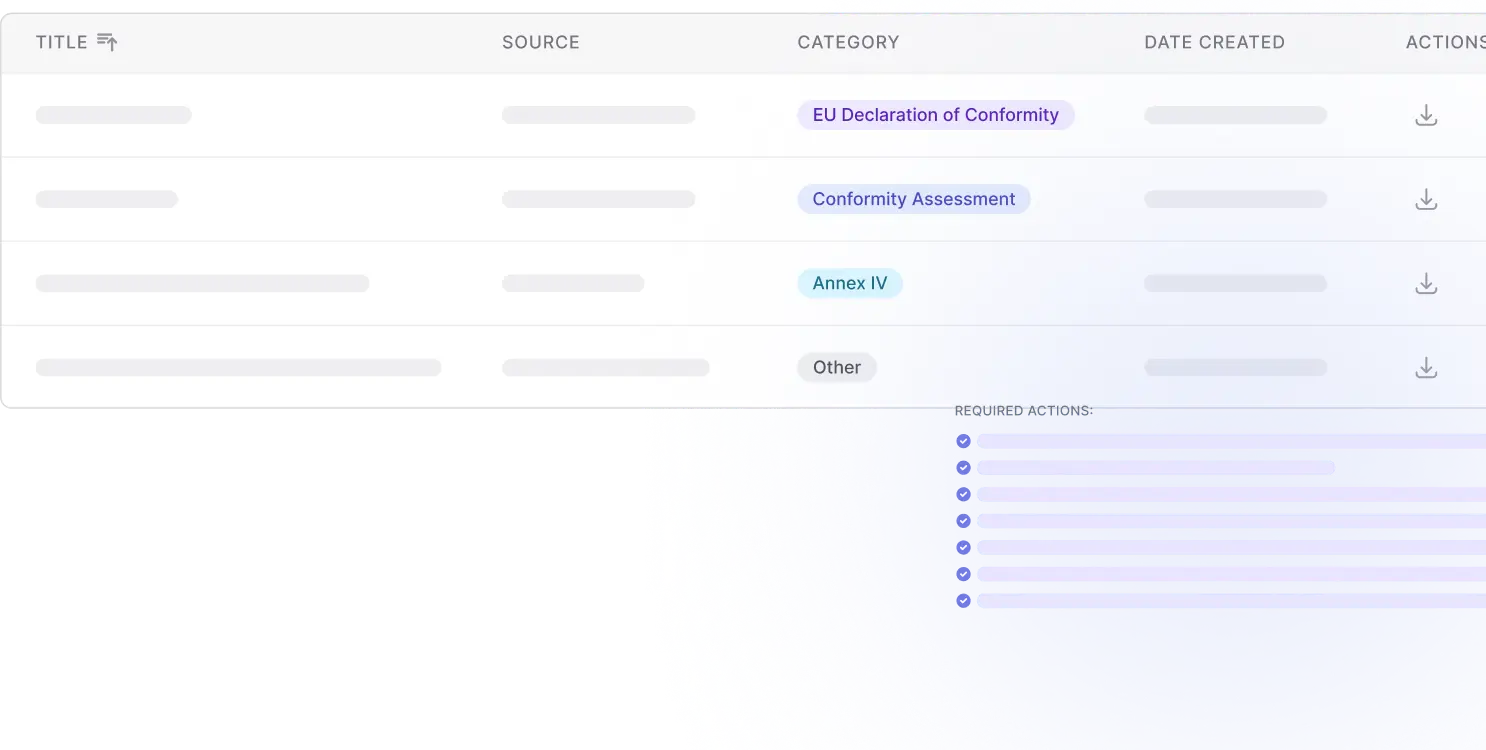

Automatically evaluate each system against EU AI Act criteria and assign the appropriate risk tier among the four of them.
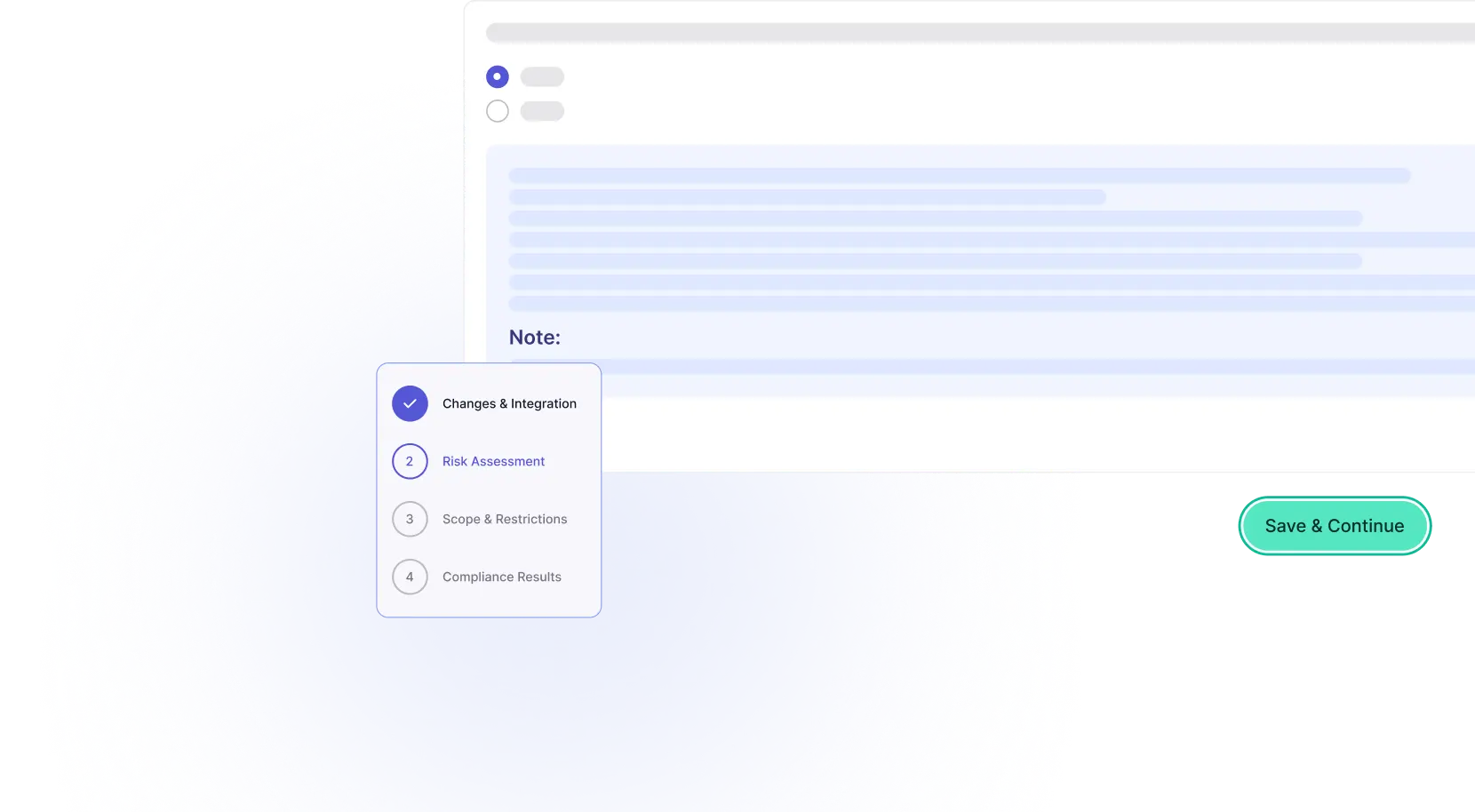

Add AI models and datasets into the centralized AI use case inventory with key metadata and ownership details.
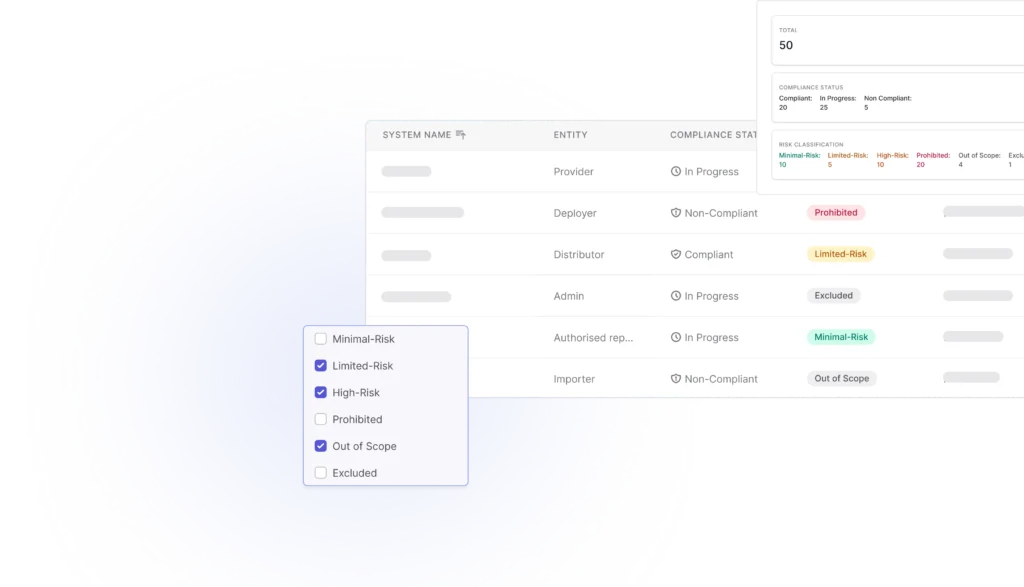

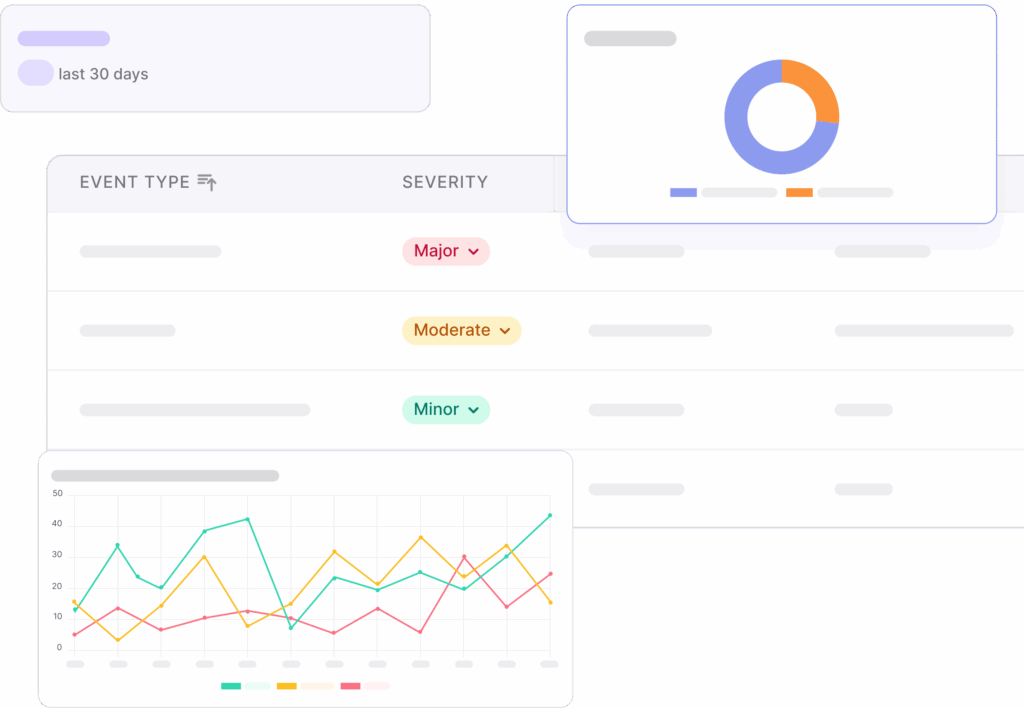
Maintain audit integrity with real-time tracking, immutable logs, and compliance dashboards. CompliAI enables continuous monitoring of every AI system, helping organizations stay compliant as regulations evolve.

Simplify your path to CE marking and regulatory conformity. Follow built-in workflows that outline every requirement, track progress, and generate draft declarations of conformity in line with EU standards.

Automatically generate, organize, and update all required documentation in structured formats. CompliAI links evidence, datasets, and audit records to build comprehensive technical files, ensuring consistency and audit readiness.

Map every AI system across your organization and determine its regulatory risk level through guided assessments aligned with the EU AI Act. The platform centralizes system ownership, data, and accountability so that you can have full visibility from day one.